Showing posts with label Intrinsic motivation. Show all posts

Tuesday, May 31, 2022

I see Warren every weekend, he makes a living as a fisherman (Cassandra Jenkins)

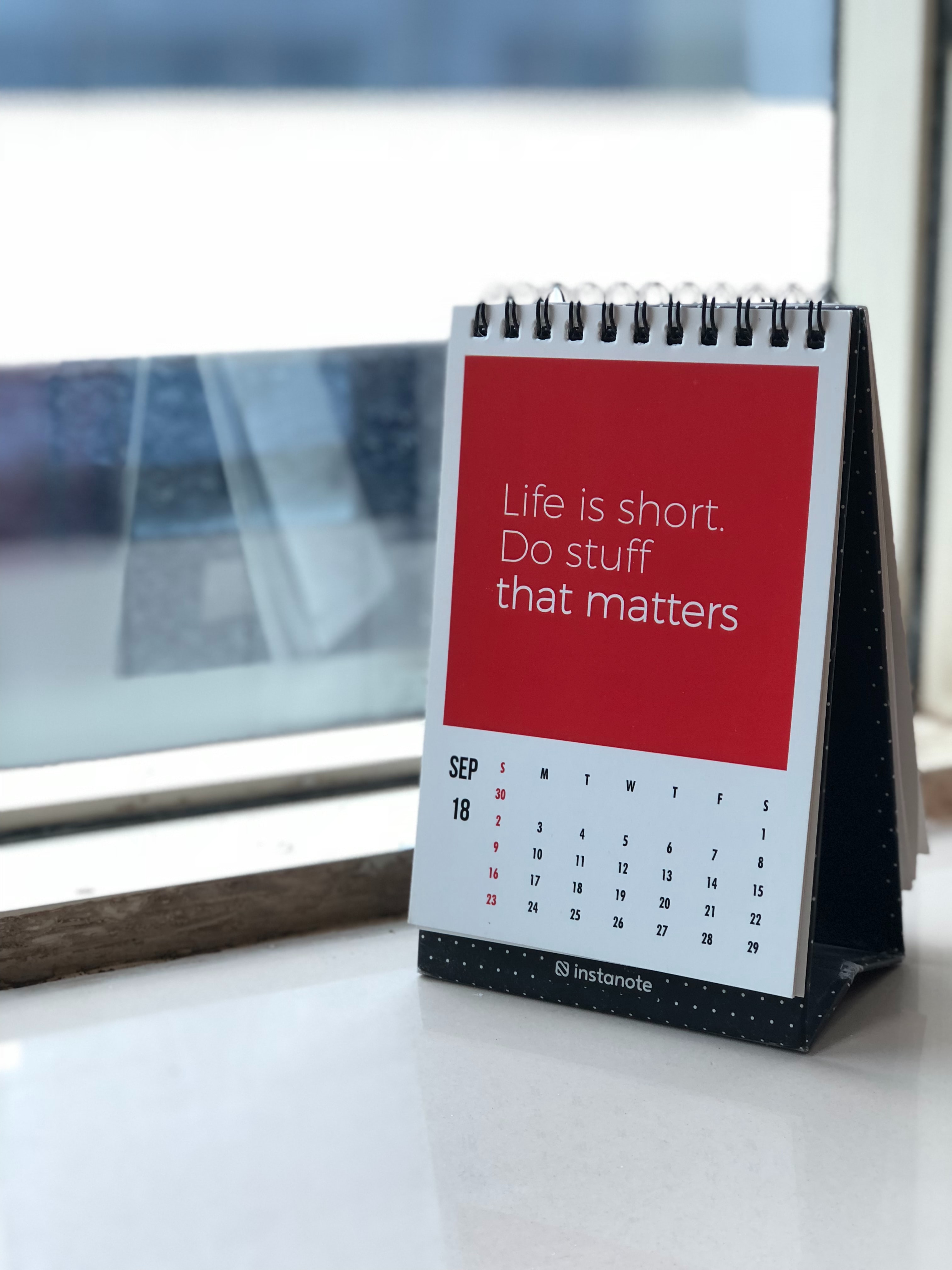
Photo by Manasvita S on Unsplash


Discussions at home recently have had me thinking about what motivates me. I notice 'motivation' has been a regular topic in this blog over the years but I've mainly concentrated on what motivates students - not what motivates me. So here goes with my top 5 (they are in random order as I thought of them):

  • A sense of purpose - I need to know/feel that what I am doing fulfils a purpose. This is to me a basic human need. I'd like to think that we are all wanting to achieve something worthwhile while we live on Planet Earth.
  • Fresh challenges - I need to feel that I am continuing to grow as a professional. My length of time spent in schools has never exceeded five years. I crave fresh challenges. Reinventions if you like.
  • The serving others/ leading others combo is very seductive - I need that combo. I tried to step back from it once and within a short amount of time I was itching for a wider leadership role. According to my LinkedIn friends, it's just me.
  • I need to know my skills are being utilised to the fullest. When they are not, I get itchy feet.
  • I like to get proper recognition for good work (but this is a nice to have, not a must have).

That about sums up what motivates me and it's pretty clear, isn't it, that for many reasons, I thrive on intrinsic motivation. 

Monday, January 4, 2021

Motivation


Read intellectual books. Motivate yourself to increase wisdom.

(Hsing Yun - January 2 entry)

Wednesday, December 2, 2020

What's it all about when you sort it out, Alfie? (Dionne Warwick)

Photo by Cristofer Jeschke on Unsplash

As we conclude one cycle of teacher inquiries and embark on the next, it's a good time to take stock and re-establish the purpose of teacher enquiries.

What are they and why do them?

The Best Evidence Synthesis snazzily says that 'Teacher inquiry should be based on your students' learning needs, your own learning needs, and the impact of your practice on student learning and achievement'.

For me, that means finding an area that I am passionate about understanding and improving. It has to be worthwhile to me because it will likely last a year of careful reflection.

My next inquiry will focus on the motivations that drive my students to succeed in NCEA internal Achievement Standards and externals. 

I believe that the motivations are complex, and that there is a real imbalance and I want to investigate that for 2021.

As per my last teacher inquiry, you'll be reading about my progress in this blog from time to time.

Tuesday, November 17, 2020

Motivation is what gets you started (Jim Ryun)


Last week we bid farewell to the senior students - off on study leave for the NCEA External Examinations.

It's been a tough few weeks as we've sought to motivate them to create study plans, complete practice essays, and have a revision programme in place.

The extrinsic and intrinsic motivations that are in play during the three terms that concentrate on Internal Achievement Standards, don't appear to apply to the Externals.

We need a rethink!

Interestingly, it seems the opposite is true in the northern hemisphere, affected by lock-downs and Covid-19 disruptions. There teachers are struggling to motivate students because there aren't exams! 

This (what motivates students and how we sustain and adapt for different circumstances) will be my Teacher Inquiry for 2021!

Monday, October 17, 2016

Freedom, paint me a picture, show it to me right now! (The Guess Who)


What's the most important skill a school can pass on to its students?

That seems like a pretty good question to my less is more brain. The most important skill. Single. Just one. 


What do you think?


I'm sure we could all come up with various answers to create a list. It might include one of these skills  from Mr Kemp: creative thinker; problem solver; collaborator; effective communicator; being ethical and empathetic.


The Evangelical School Berlin Centre (ESBC) is a German school that has become very successful by working from that point (deciding on one skill) and making the school fit around that one skill. 


Interestingly, it's not one of Craig Kemp's.


So, what is it?


Well, the school’s headteacher, Margret Rasfeld, argues, the most important skill a school can pass down to its students is the ability to motivate themselves. 


I like this!


She goes on to say, “The mission of a progressive school should be to prepare young people to cope with change, or better still, to make them look forward to change. In the 21st century, schools should see it as their job to develop strong personalities.”


I like this too!


Recently, I wrote a post about the lack of motivation/ urgency from students asked to study during a recent break between terms. Not for the first time, I was laughed at for suggesting we change our semantic stance from 'holiday' to 'study break'. 


The intrinsic motivation within the great majority of my students seemed to be completely lacking during the study break. To clarify further: I'm hopeful that some students in other classes did study - it's just that none of mine did anything for me to mark or to provide valuable feedback.


As for change - my current school is like many others, I guess. Many of the students do not like change and that's, if anything, an understatement. Of course, many of the staff do not like change either. 


Two years after changing the organisational culture of the school from a horizontal system to a vertical one, and still the students can not adapt to that change. More than that, they want a return to the previous system of horizontal form classes.

To my way of thinking, this is a great pity. As Don Henley knows, "Don't look back, you can never look back!"

I've not come across this unwillingness to change to this degree at any of my previous schools.

We should be better at making our students look forward to change.

Saturday, April 4, 2015

Finland has it all (Monty Python)

In the previous post I alluded to the news from Finland that they are moving away from subjects. 

The Finns. What is it about the Finns (no relation to Neil and Tim I believe)?

Apparently, according to an article I read about the wonderful education systems in South Korea and Finland (the bold is my addition): 
'Finnish culture values intrinsic motivation and the pursuit of personal interest. It has a relatively short school day rich with school-sponsored extracurriculars, because culturally, Finns believe important learning happens outside of the classroom. A third of the classes that students take in high school are electives, and they can even choose which matriculation exams they are going to take. It’s a low-stress culture, and it values a wide variety of learning experiences.'
Okay now this is interesting too. I guess the third of electives has now gone to two thirds or more with the doing away of subjects.

I know other countries can't replicate a culture but some of this sounds a lot like NZ: the low stress, variety, extra curricular accent is us.

Even the intrinsic motivation part is what I see in the majority of cases in my school (this may not be the case throughout the entire school network I freely admit).

So wot's...uh the deal? I know I'm not conducting any kind of deep scientific analysis here but: why aren't we way up there with the Finns (again - no relation) and the South Koreans?

it could be this:
Finns share one thing with South Koreans: a deep respect for teachers and their academic accomplishments. In Finland, only one in ten applicants to teaching programs is admitted. After a mass closure of 80 percent of teacher colleges in the 1970s, only the best university training programs remained, elevating the status of educators in the country. Teachers in Finland teach 600 hours a year, spending the rest of time in professional development, meeting with colleagues, students and families. In the U.S., teachers are in the classroom 1,100 hours a year, with little time for collaboration, feedback or professional development.

Finland, Finland, Finland (as Monty Python would say), the country where I quite want to be.